How to tell a story - breaking from the average hero's journey
just as the screenplay writers and wordsmiths have explored deviations from the hero's journey, perhaps design and architecture should too.
After reading about this article, i realised that we as designers and architects haven't really been looking at this problem clearly. Why are we trying to conform to the average narrative?
The hero's journey in graphic design, while nice, is the first step to greatness in creating a narrative structure for your client.
According to some references, the value of the Hero's Journey is in understanding how to deviate from it, to create surprise. The value of the Hero's Journey is in breaking away from it.
###Michael Kass mentions this to great effect:
####For organizations:
- Bob wasn’t doing well.
- Bob found our organization and went through our amazing programs.
- There were some bumps along the way. . .and now Bob is doing great!
- Give us money.
####For individual entrepreneurs and leaders:
- I wasn’t doing well. I’d hit rock bottom.
- I found this amazing thing.
- Now I’m doing much better and want to help you.
- Follow me / Hire me / buy my thing.
As recently as 7 or 8 years ago, these linear stories worked well. Now, it’s less likely.
####so, in order to give other journeys equal exposure, here's a list them found on the internet.
#####disclaimer: these are lifted right out of other sites. I didn't do anything on top of them.
###Todo: write all stories on the GI/BE axis as described by Kurt Vonnegut
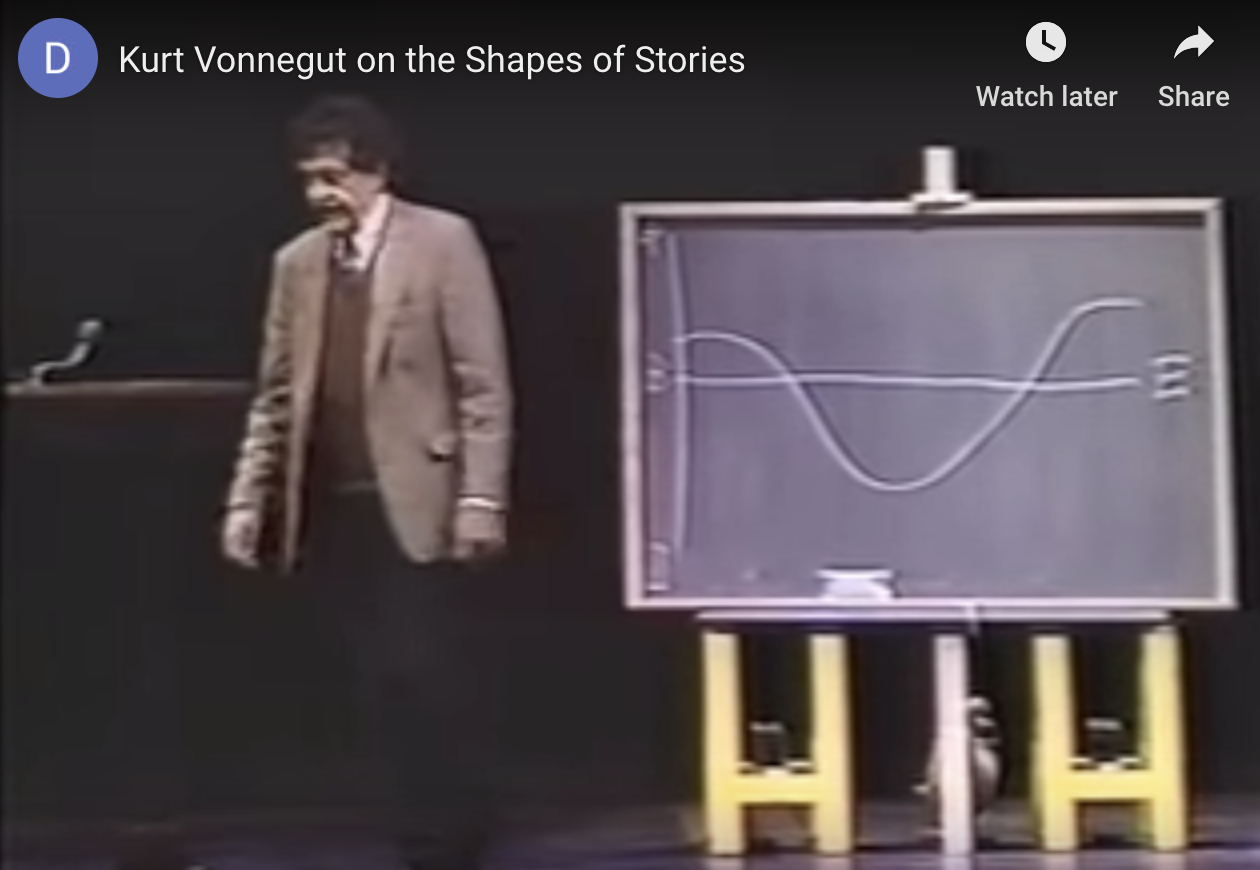
G - Good fortune
I - Ill fortune
B - Beginning
E - End
#The Hero's Journey
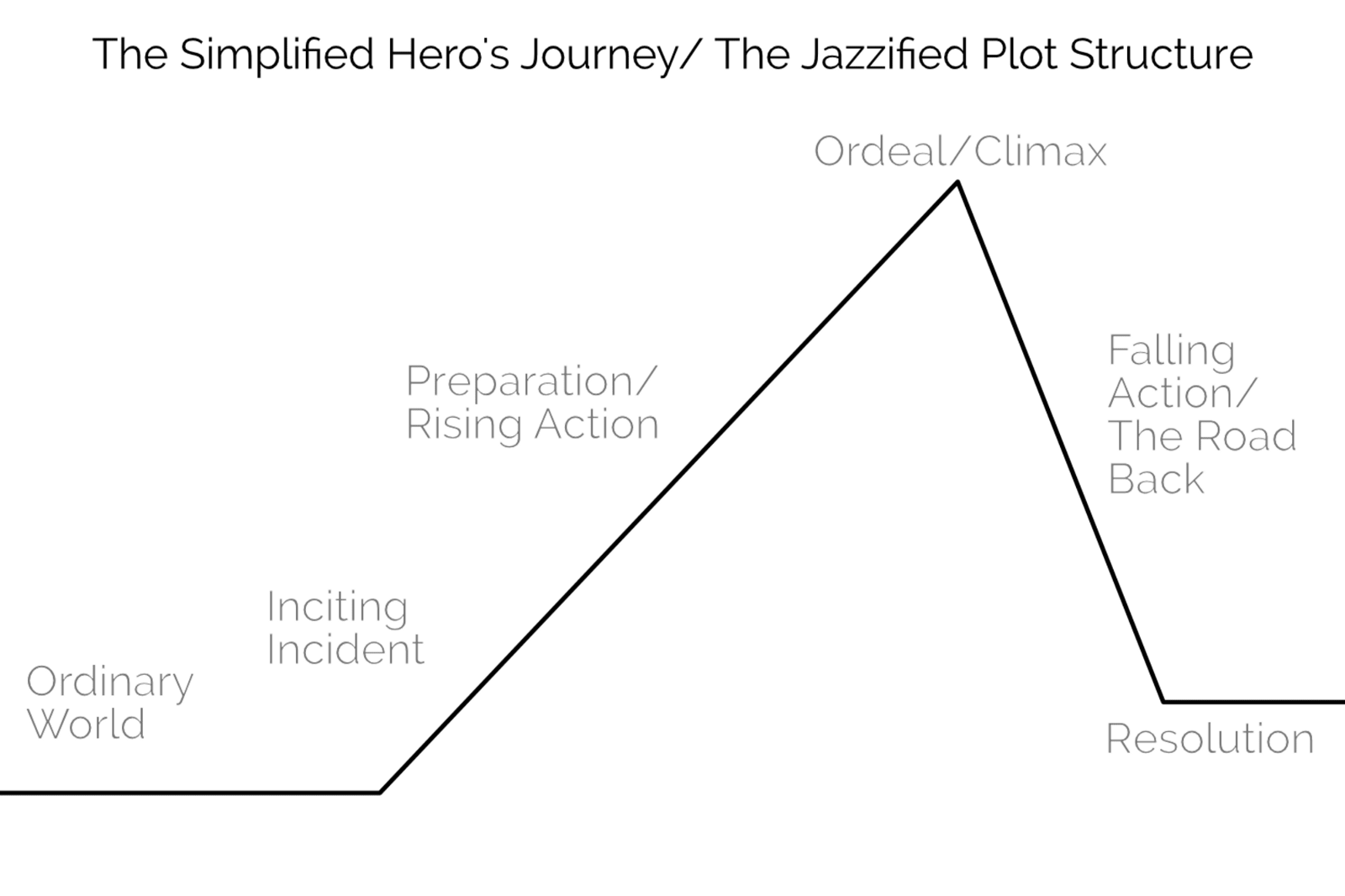
- The ordinary world/exposition is where our hero/protagonist/person/thing/main character starts. It’s the every day, the safe, the boring, the life the hero already knows.
- The inciting incident is the event or thing that pulls or (more often) pushes the hero into the story. It’s what gets them involved in the story whether they want to be or not.
- In the rising action/preparation phase, the hero prepares (sometimes unknowingly) for the ordeal/climax which is when they go up against the villain (and prevail!).
- After the hero prevails against the villain, they must return to their ordinary world and bring back the new knowledge and/or mythical object they got from/for defeating the villain.
- Finally, in the Resolution, we tie up all the loose ends and throw a dance party.
#The Touchstone
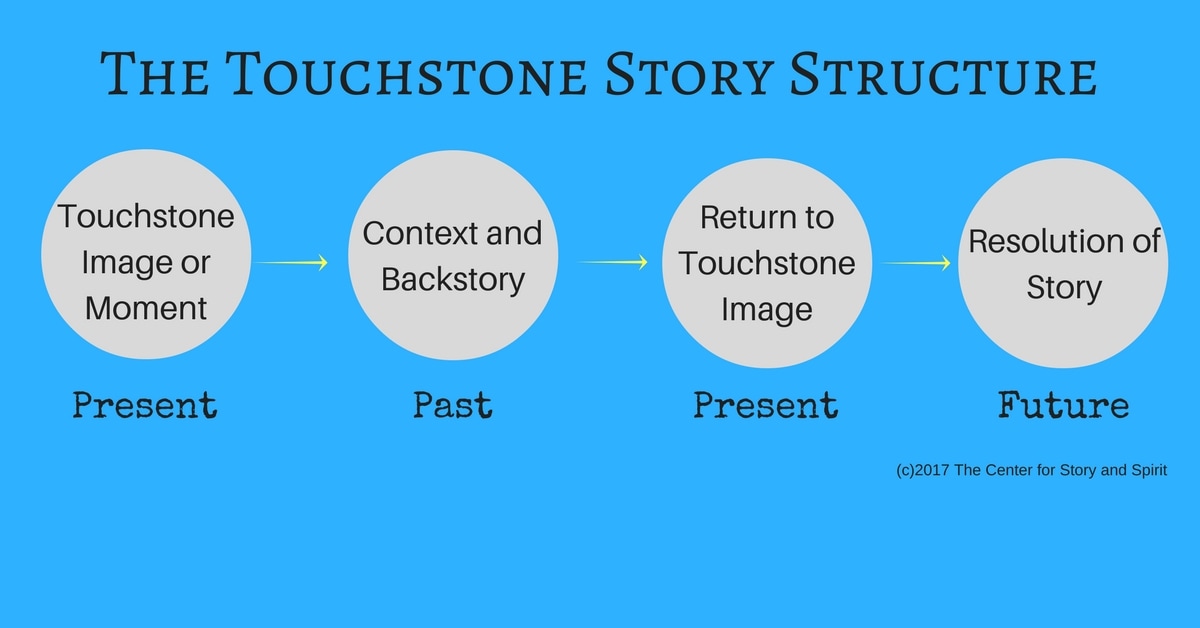
- In this structure, you introduce a single image/moment of decision or tension and present it with a minimum of context. In essence, you’re dumping the audience into the middle of a situation without much of a sense of where they are or why.
- With that image or moment established as a touchstone, you backtrack to fill the image and place it in context. What brought the main character to this moment? What is at stake?
- You bring the audience back to the touchstone moment and complete the story, resolving the decision or moment of tension.
When experimenting with and using this structure, here are a couple of thoughts to keep in mind:
- This structure is achronological. You start in the ‘present,’ move into the ‘past,’ and then return to the present before carrying the story forward. This creates a sense of disorientation in the audience and inspires curiosity. That said, it’s important to make sure the timeline is crystal clear so they don’t get lost!
- The touchstone image or moment should be a moment of maximum stakes or tension. In a traditional ‘Hero’s Journey’ narrative, it would the climax, the point at which the main character undergoes a significant shift.
#The Wagon Wheel
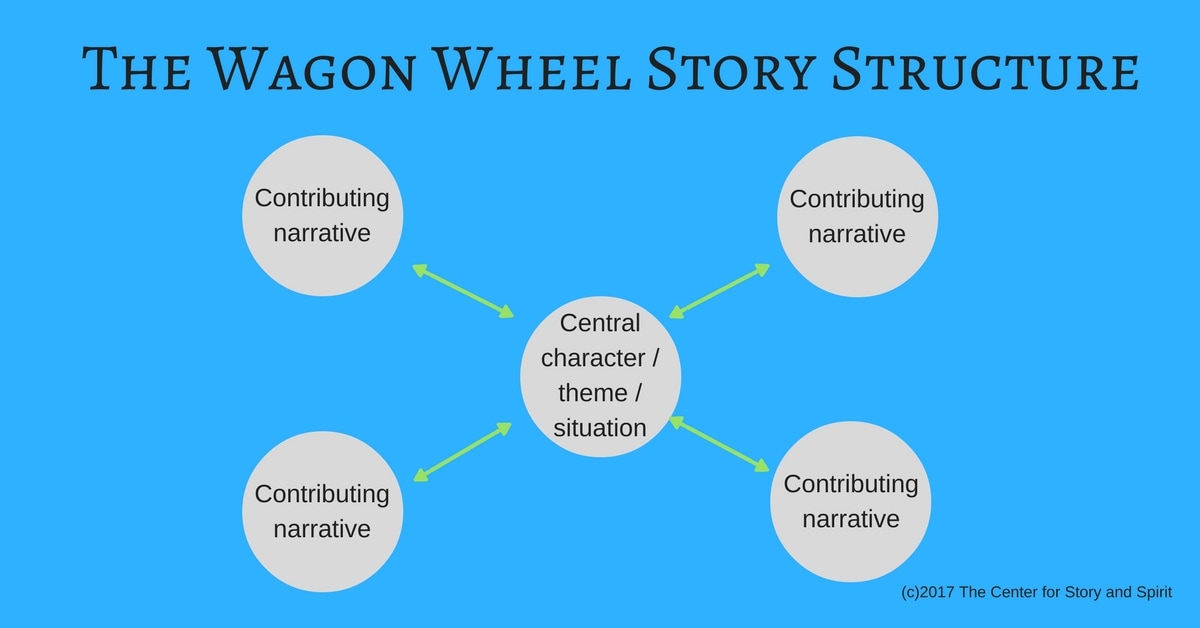
This structure works well when you want to examine a person, relationship, or theme from several different perspectives. Let’s say you want to show how many different stakeholders come together to support the transformation of a client. A hero’s journey narrative would center on the client’s point of view. The Wagon Wheel places the client at the center of several different narratives.
Like the Touchstone Structure, this one is achronological. The contributing narratives may have occurred at different times and involve different characters. In fact, while their stories are significant to the central theme or character, the people who drive the contributing narrative may not even be personally connected with the central story.
I’ve found this structure to be particularly useful when attempting to communicate complex systems in human terms. For example: a central narrative may be the moment that a person experiencing homelessness signs a lease. On its surface, the moment may look simple. But creating the circumstances that made that moment possible required the dedication of multiple people and systems, each of which is its own contributing story. By focusing on the human center of each story, the complex ecosystem becomes much more accessible. And we don’t have to use words like ecosystem.
Scandinavian narrative forms
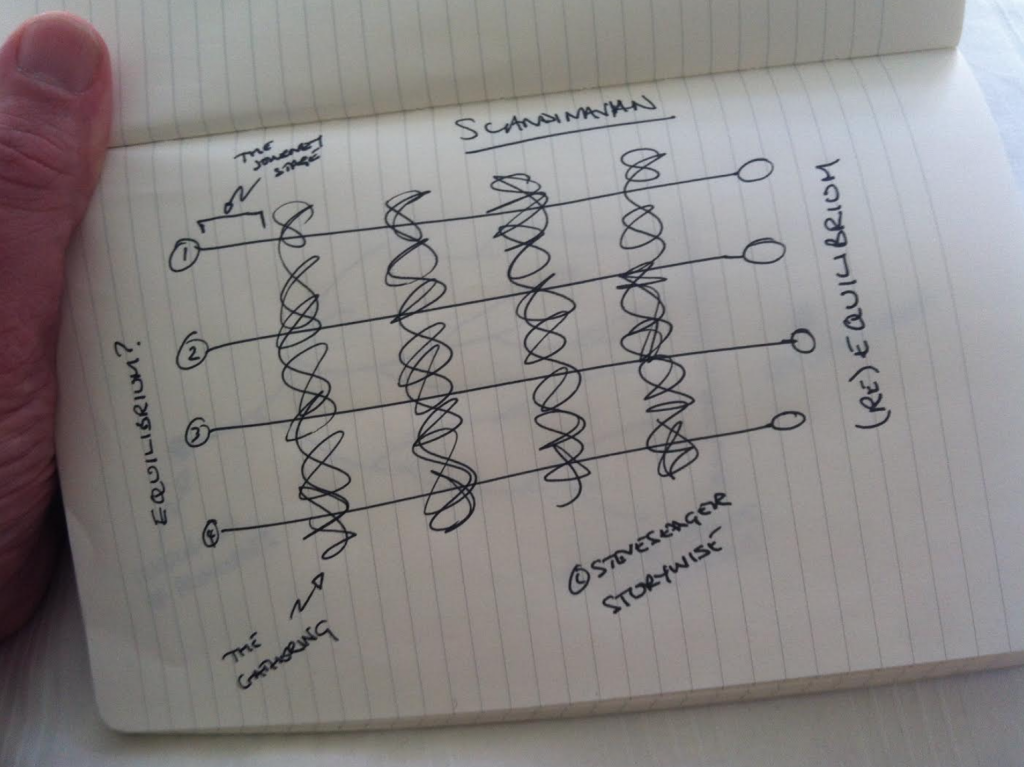
Unlike Hollywood or Western European narratives which privilege a single protagonist (like Campbell’s Hero’s Journey), Scandinavian narrative forms are often built around multiple characters (most often three or four), with a ritual-based truth as the red thread. Yes, each of these characters has their own trajectory — a beginning, a sort of middle and a sort of end. And yet, during their journey, all the characters meet in a central meeting point several times. They discuss their adventure to date. Realign around the ritual truth. They fight. Learn. Develop — sometimes not. And then they move on to the next stage of their journey. There are typically five acts for each protagonist and, in line with the number of protagonists, there are usually at least three consequent ‘endings’.
#Indian Narrative forms
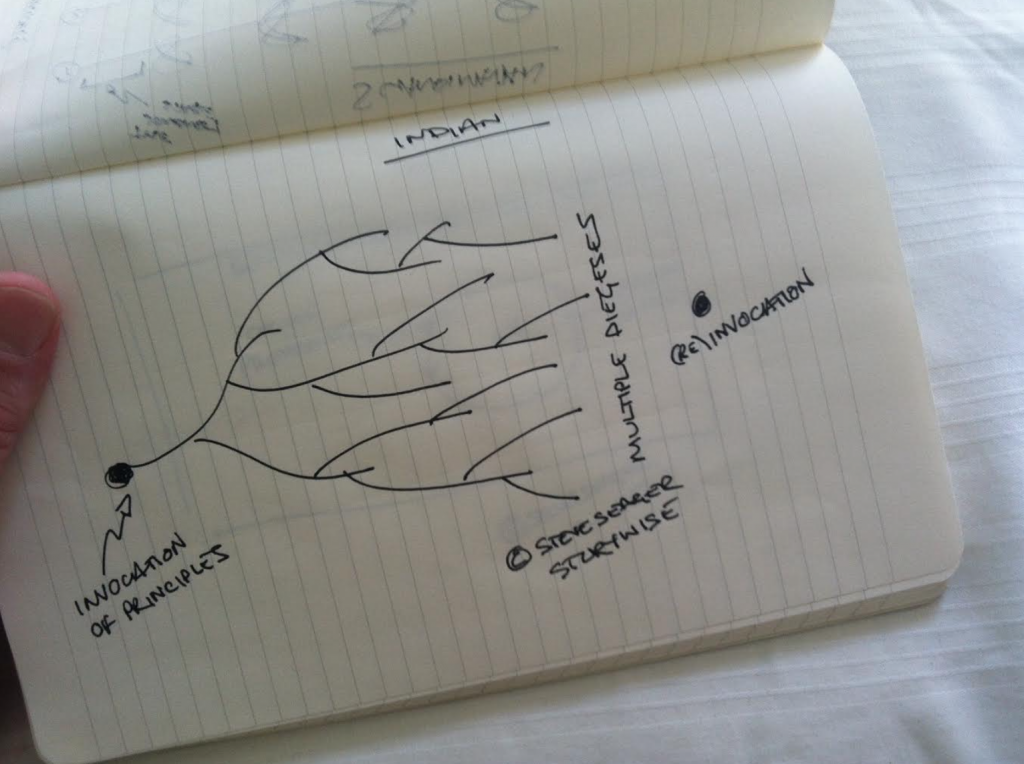
Indian narrative forms are radically different from western forms. Watch a Bollywood movie. One moment the film is a romance, then a thriller, then a musical, then a martial arts movie — confusing for a western audience but totally natural for an Indian audience. As experienced in mathematics, microtonal music, literary forms and more, Indian culture seems eminently comfortable with complexity and non-linearity. The traditional starting point of common narrative forms (especially in Hindi) is a religious ritual invocation that establishes an emotive, spiritual sensibility for what follows. The ensuing narrative form is dendritic and offers multiple diegeses (world views), designed to accommodate many differing perspectives.
#Central African narrative forms
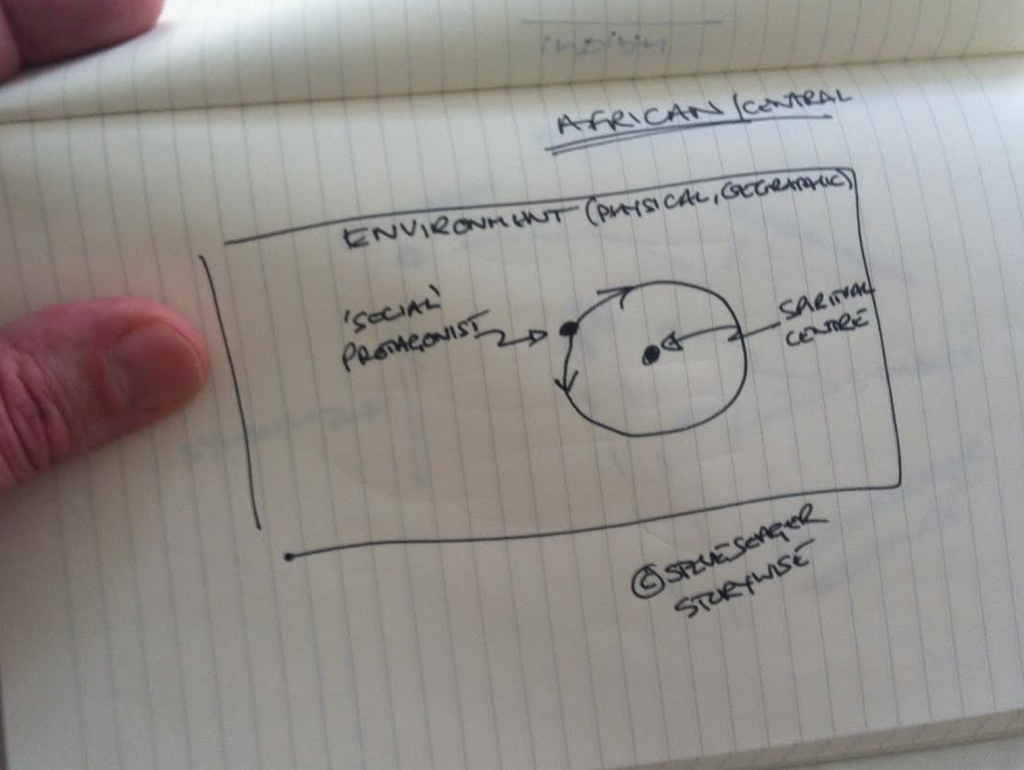
Unlike Scandinavian and Indian narrative forms, the stable plot elements in Central African forms are often not function-based, but rather thematic and relational. Unlike many other narrative forms, the environment is privileged over a single protagonist, the social context is privileged over the individual protagonist, and the spiritual centre is privileged over the individual. All of the action — the ‘journey’ if you will — happens concretely within these clearly defined parameters. You can find this narrative model within Central African oral traditions, film, literature and more.
#Autochthonous narrative forms
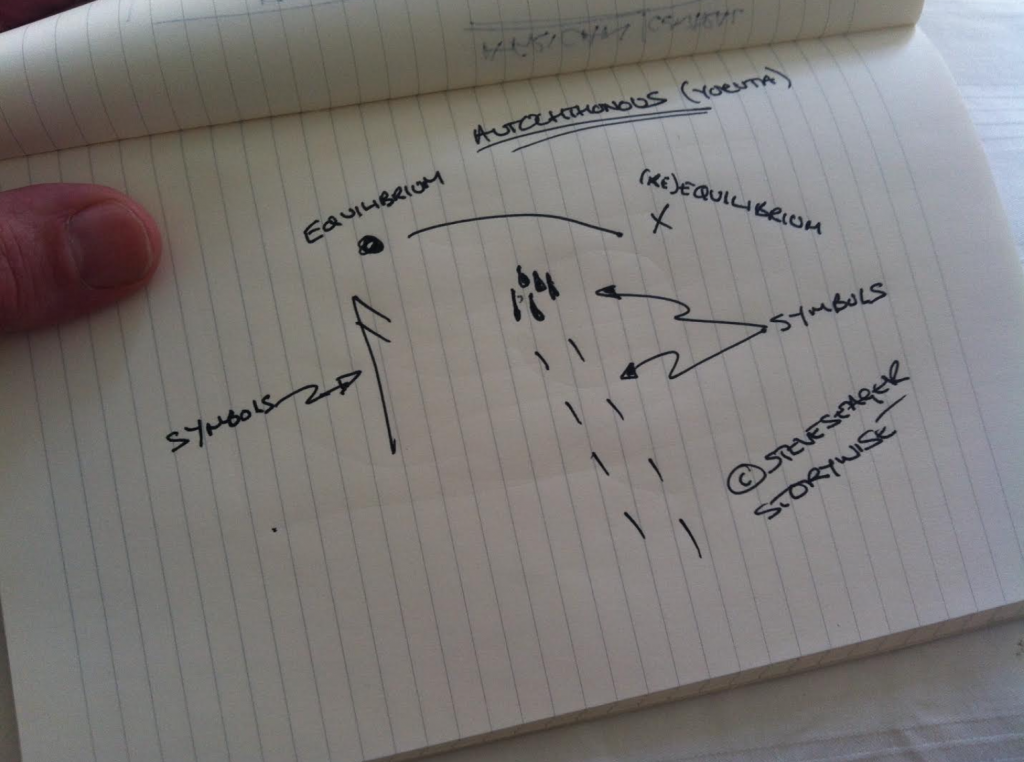
Autochthonous people are those native to the place they live rather than ‘just’ being born or engendered to the place they live. While my research is admittedly limited, regardless of geographical location, it appears that common autochthonous narrative forms are quite unlike any other forms — with the possible exception of avant-garde film. To illustrate: whereas many Hollywood films are all story and no plot (big visual plays for attention with little motivation) these narratives are, in effect, all plot and no story. While the plot points are offered, the actual interpretation of the ‘story’ is left entirely up to the reader. The prime narrative function; to equip the reader with the skills to ‘read’ and interpret signs and create their own stories. The key message is left entirely up to the reader to decide. These narrative forms are often an interactive, learning device with no ‘auteur’ — only, in effect, an audience.
Interestingly …
- Teams in strongly innovation-focused companies almost always choose the Indian narrative form.
- Teams in heavily campaign and product-focused companies almost always choose the Scandinavian model.
- NGOs almost always choose the Central African narrative model.
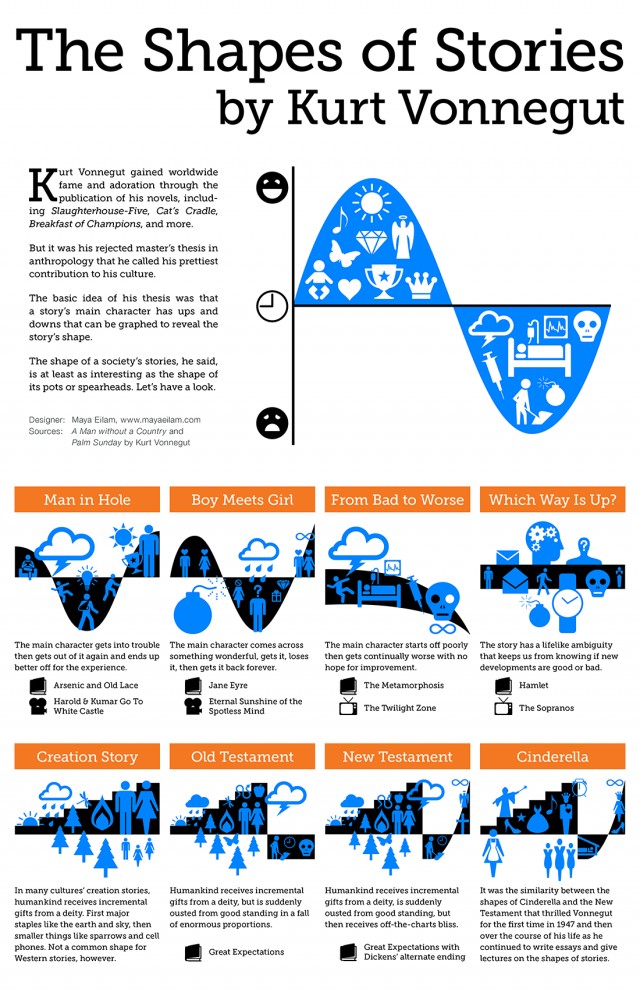
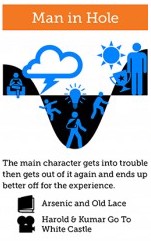
#man in hole
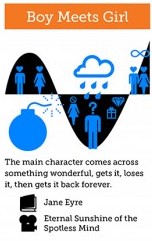
#boy meets girl
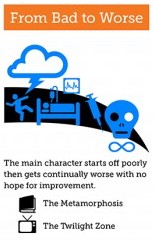
#from bad to worse
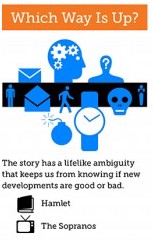
#which way is up
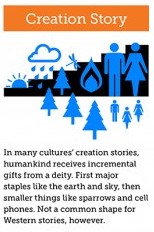
#creation story
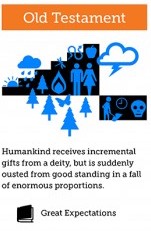
#old testament
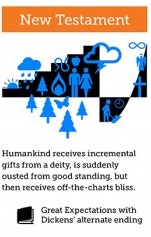
#new testament
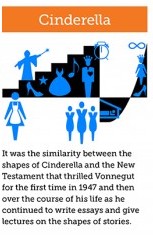
#cinderella
#White Buffalo Woman
America is rich with stories from other cultures. The people who were native to this continent have stories like the arrival of White Buffalo Woman. She comes to the people at a time of trouble in their community, when hunting is poor and the people might starve. But she doesn’t fight demons or stage great battles. Instead, she brings agriculture, crafts and arts, and ceremonies for peace. She brings the things the people need to survive and thrive for generations.
#Spider Grandmother of the Pueblo people
Or we could turn to the Spider Grandmother of the Pueblo people, who sings to create human beings. She led them up through a hollow reed to this world of light and into consciousness. If you are lost, she will perch behind your ear to help you find your way. But know that you must ask for help. Know that you must listen to her quiet voice; you must heed her wisdom.
#Saint Bridget of the British Isles
There is Saint Bridget of the British Isles, who was the goddess Bride before the Romans brought Christianity to Brittan. Bridget, along with her sisters, managed to claim good farm land away from the greedy duke. Ever after, her people would able to feed themselves.
#Jataka stories from the Buddhist traditions
There are the Jataka stories from the Buddhist traditions. These are a collection of stories meant to illuminate the prior lives of Gautama Buddha before he attained Buddha Nature. These stories are sometimes similar to Aesop’s tales, but they carry a different idea of what it is to lead a meaningful life. In these tales the gain or loss is not for the main character. It’s not even for the man, Gautama. The gain is for us, however far away and however many centuries into the future we live. Buddha’s enlightenment opens a door for our own.
#Stone Soup
Think of the European folktale of Stone Soup. Three soldiers are traveling home after a long, bloody war. They are tired and they are hungry. But the people of the villages they pass through are afraid of them, their swords, and their anger. The villagers, too, are tired of war and destruction, and they hide in fear from the soldiers. Yet somehow, one of the soldiers uses the very human instincts of curiosity and generosity to make soup out of a stone, and community out of the needs for peace. He is remaking home as the village join in a feast they all prepared. This is a different kind of Hero than Luke Skywalker. And perhaps one who can show us how to walk a path together.
References